Be first to read the latest tech news, Industry Leader's Insights, and CIO interviews of medium and large enterprises exclusively from Manage CFO Magazine

General Datatech
Building A Modern Accounting Organization For Business Growth
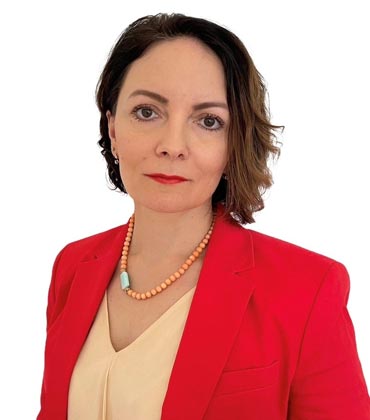
Liana Clarke
Liana Clarke is a finance and accounting executive with leadership experience across technology private equity-backed companies. As VP Chief Accounting Officer at General Datatech, she focuses on financial reporting, operational discipline, compliance and building scalable accounting processes that support long-term business growth.
Accounting as a Strategic Business Function
I began my career in the Big Four and then transitioned into industry, exploring both financial reporting and controllership roles. My experience spans across public and private companies in a variety of industries, with the last 10 years concentrated in private equity-backed technology companies. I spent the last four years at General Datatech (GDT), a technology provider specializing in IT infrastructure, cybersecurity, enterprise networking, consulting and managed services.
Although accounting was not my original career path, business and finance were my areas of interest when I first entered college, and accounting initially seemed boring and repetitive. But one of my mentors encouraged me to explore a graduate accounting program, and once I did, I never looked back.
I enjoy changing and challenging environments and have learned that there is not a dull moment in the accounting profession. New accounting pronouncements emerge, policies change, business processes evolve and organizations go through mergers, acquisitions, diversifications and bankruptcies. We may be called “the back office”, but accounting and finance are the foundation businesses grow on. Besides the challenges of the role, accounting provides a unique, organization-wide perspective that enables cross-functional partnerships and a deeper understanding of core business operations.
Today, as Chief Accounting Officer at GDT, my primary responsibility is safeguarding the financial integrity of the organization. I oversee financial reporting, close excellence, technical accounting, statutory compliance, audit, tax and regulatory readiness. I also lead accounting transformation and automation initiatives, revenue, foreign entities, SAP support and sales tax compliance. Over the past four years, the organization has expanded to include treasury and credit functions, payroll and commissions processing, a master data team and business finance and operations support for one of the company’s business segments.
Strengthening Financial Infrastructure through Transformation
Most of the organizations I have been part of were undergoing growth initiatives, which required evolving existing processes and controls. I viewed these efforts as opportunities for improvement. At GDT, my teams and I have contributed to that transformation through several initiatives.
We implemented BlackLine to consolidate reconciliations and automate accounting checklists across all entities and automated financial reporting, which was previously manual and Excel-based. We also implemented new lease accounting guidance under ASC 842 and revenue recognition under ASC 606, expanding recognition of multi-year licensing and maintenance contracts.
With the addition of a treasury and compliance function, we improved visibility into daily cash positions and forecasts, strengthened management of our credit facility and interest obligations, optimized insurance coverage and costs and enhanced FX risk management. We also introduced a credit department, strengthening credit review procedures while simplifying customer onboarding. By building out the sales and use tax function and bringing in the right talent, we reduced reliance on external consultants and improved compliance effectiveness and regulatory consistency.
I contributed to quote-to-cash process improvements, restructuring warehouse agreements to improve inventory-to-revenue conversion, SAP process improvements and automation initiatives, including multi-year orders and commissions recognition, and enhanced GAAP reporting to analyze financial results better. I also participated in implementing GDT’s white-label financing program.
“At the end of the day, we have one goal in mind, supporting the business growth and development.”
These initiatives improved operational efficiency, transparency and scalability while enabling faster, more informed decision-making. For me, the value of transformation lies in understanding cause and effect. Streamlining the monthly close is not simply about reducing the number of days to close the books; it creates more time to analyze results, deliver timely financial insights, understand the impact of transactions and better support business decisions. My approach is to balance compliance with core accounting principles while supporting business needs through modernization, workflow optimization and automation.
Building Cross-Functional Alignment through Communication
Collaboration across sales, operations, legal, IT, HR and other functional areas is key to staying aligned with broader business objectives. I participate in department meetings, KPI reviews, quarterly business updates and strategic discussions. These interactions provide visibility into company initiatives and opportunities to support broader goals. I view our auditors as strategic partners and believe it is always better to seek their perspective before implementing significant accounting changes rather than after the fact.
Bringing awareness to the team is also essential. Not every team member attends every meeting, so sharing project updates and explaining the “why” behind initiatives helps enable effective execution. I meet with the full department every two weeks to review company priorities, ongoing projects and how each team contributes.
Adapting Financial Leadership for Long-Term Growth
The Heraclitus quote states that there is nothing permanent except change, and we are embracing it. At GDT, we continue strengthening financial governance through standardized accounting policies, improved disclosures and enhanced regulatory reporting across our U.S. and global entities. Our goal is not simply to produce reports but to present financial information in a way that enables management to quickly interpret, understand and apply it when making strategic decisions.
Digital transformation and automation remain ongoing priorities. Following the migration to SAP RISE, we continue modernizing SAP processes, automating manual workflows and expanding automation in revenue recognition and commissions calculations, while evaluating practical AI applications like data mining and supporting customer credit reviews within finance operations.
We also invest in employee development. GDT brings employees together to discuss company strategies, performance and key initiatives. We support learning through LinkedIn Learning, product education sessions, external partners and professional industry events. These efforts have contributed to GDT being recognized as a Great Place to Work for three consecutive years.
The CAO role extends beyond accounting operations, financial analysis and compliance. It includes partnering with the CFO, CEO and other senior executives to provide financial insights that support business decisions and strategies. I also participate in developing customer and partner financial solutions that help unlock top-line growth while maintaining financial integrity and compliance.
I strongly believe finance leaders should prioritize communication. Strong controls, reporting structures and compliance processes are essential, but without effective communication, business alignment weakens. Stakeholders can lose confidence, key initiatives may be overlooked and decision-making slows down. Communication across the business is therefore essential to maintaining alignment and supporting sustainable growth.
This perspective is captured well by an analogy comparing accounting and finance functions to the human brain. Just as the brain processes sensory input to assess the body’s health, accounting and finance teams process financial information to understand organizational performance. We regulate financial resources, support planning and decision-making and maintain the communication channels that sustain productivity, stability and growth. We manage risk, ensure compliance and provide the financial foundation on which every successful business is built.
The articles from these contributors are based on their personal expertise and viewpoints, and do not necessarily reflect the opinions of their employers or affiliated organizations.